

Tips to Prepare for Fall Hiking
Hiking in Autumn
Autumn or Fall, call it what you will, but many hikers agree that it’s the best time to hit the trails. Most of the United States experiences fall in September and October. Here in the southeastern US, we’re lucky and autumn often extends through most of November.
That’s three months of great hiking.
What are the Benefits of Hiking in the Fall Months?
What’s not to love about fall hiking? In September, the bugs begin to disappear and you can feel that first cool snap telling you that fall has arrived. October brings in the color with peak foliage across most of the United States. In early November, enough leaves have fallen that you now have unencumbered views.
Here are just a few of the benefits of hiking in the fall.
Fewer bugs. You don’t need to douse yourself with chemicals or walk around with nets protecting your head.
No crowds. Kids are in school, people are preparing for the holidays, and the water holes and picnic tables are not enticing anymore. You can have some of your favorite trails to yourself if you time it right.
Better views. As the leaves begin to fall in October and November, elusive views open up. And that haze often appearing over the mountains in the summer and spring disappears, offering clear sight for miles.
Cooler weather. The heat and humidity are gone. No more sweat-soaked shirts, or sunscreen melting into your sweat and running down your face.
Trails will be different. Trails look different in the fall. You may not recognize some of your favorites shrouded in leaves and without flowers.
Sounds are different. There’s a quiet that starts to settle in when fall arrives. Animals are less active, and there are fewer people on the trails. Don’t forget the crunch of leaves under your feet.
What to Wear Hiking in Autumn
Clothing is more important in cooler weather. Layering is essential and you’ll need to carry additional clothing. There’s a greater concern with staying dry and preventing hypothermia. It’s not just wetness from rain or snow, but also from sweat that you need to monitor and address.
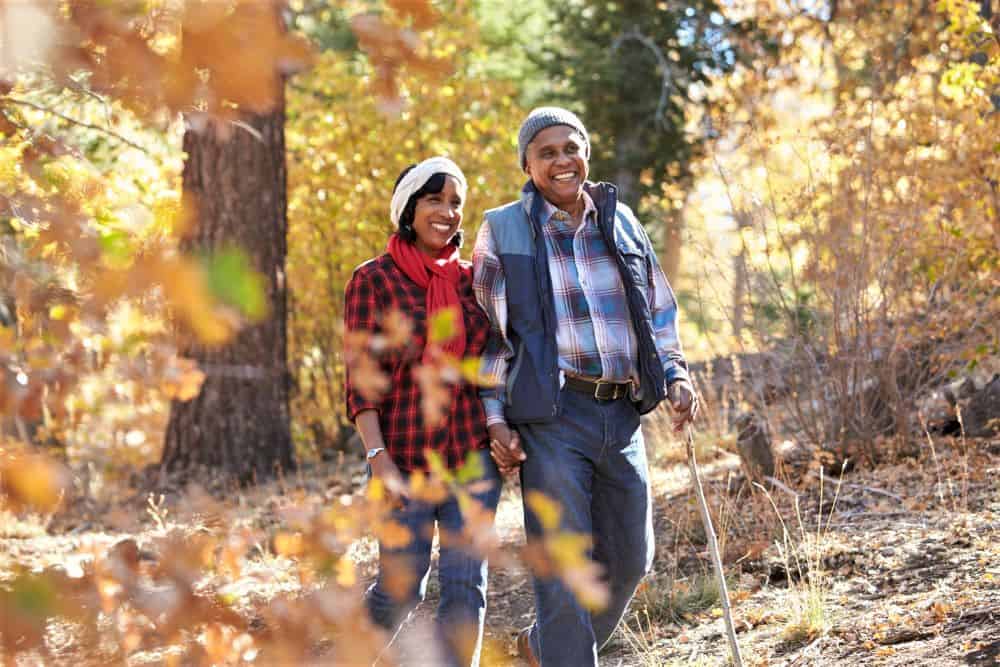
Start with a short sleeve base layer that is designed to wick moisture away from your body and help it evaporate.
Next, add an insulating layer. The heaviness of this layer depends on where you’re hiking and the temperature. In early fall at low elevation, you can try a lightweight long-sleeve shirt. A 150-200 weight wool shirt is a good example. As it cools, or if you’re heading to higher elevations, you may want a 250-weight wool shirt or a fleece.
Carry a third insulating layer that’s thicker. A polar fleece jacket, vest, or down jacket are good examples.
For your bottom, wear non-cotton hiking pants. While some people like to hike in leggings, I’m not a fan. Hiking pants have some water protection, pockets, and allow your legs to breathe. Leggings don’t always offer the insulation you need and can become wet because they can’t help evaporate the moisture well.
There are insulated leggings which can be nice if it’s cold enough. These can be useful for shorter hikes. On longer hikes, they may be too warm.
Always have good, wicking socks, such as wool socks. You can read about what to look for in a hiking sock and find our top picks.
Also carry rain gear, even if there’s no rain in the forecast.
A warm hat and gloves can also be handy as the weather cools throughout the season.
How to Manage Your Clothing While Hiking in Autumn
As you hike, you’ll warm up quickly. Start out a little cold so you don’t begin sweating right away. If you still feel uncomfortable after 10 minutes of hiking, add a layer.
Depending on the weather, consider heading out in your short-sleeve base layer and first insulating layer.
When you stop for a break, to take photos, or have lunch, add your second insulating layer.
A great way to help manage your body temperature is to wear a hat. This is especially helpful when hiking in October and November when it becomes cooler outside. It’s surprising how well a hat can cool you down if you remove it, or warm you up when you put it on.
Things to Consider When Hiking in the Fall
While hiking in the fall months is beautiful and fun, there are some considerations and extra precautions.
Shorter Days
You have fewer hours of daylight. It’s best to either start your hike early in the morning or adjust your mileage to ensure you won’t end up hiking in the dark.
While you should always have a headlamp, in the fall it’s imperative you remember to put one in your day pack.
Along these lines, check the hours for where you’re hiking. Many parks change their hours to account for the change in daylight and some mountain areas begin to close roads. Make sure you know when the area is open for hiking.
Drink Water Even if You’re Not Thirsty
Many hikers don’t feel as depleted in the cooler weather which is great. The downside is that they also don’t realize they need water. You may need to consciously think about drinking as you hike.
Help Hunters See You
Know your hunting seasons, days hunters will be out, and areas where hunting is allowed.
Always wear at least one item of blaze orange clothing when hiking. A hat is a great start and a vest is even better.
I have a hat and scarf. If it’s too hot for the hat, I tie the scarf on my day pack, making sure it’s fluffy and visible.
Stay on the trail. Don’t go off-trail in areas where hunting is allowed, especially in the early morning and evening. Good hunters are aware of the trails and know hikers may be on them. Wandering off-trail can disrupt the hunters and cause confusion.
Be Aware that the Terrain May Not Be Dry Underneath
While the leaves may crunch as you walk and appear dry, they often trap moisture underneath the many layers. It’s not uncommon to hit a patch of leaves and go sliding.
Walk with purpose and make sure you’re paying attention to your surroundings.
Pay Attention to Your Group and Stick Together
It’s always important to stay together, but in cooler weather, it’s even more important. Even if you’re a faster hiker, don’t take off and separate the group. You’re responsible for each other. When groups become separated and there’s an issue, it’s difficult to piece together what happened, and where.
With limited daylight and temperatures dropping fast when the sun goes down, there’s not a lot of wiggle room to locate everyone and get the group back together if there’s a problem.
Have a Paper Map to Back Up Your Phone
You need a paper map to back up the GPS trail app on your phone. Phone apps are great. Heck, I love them for staying on track. But phones don’t particularly like to be cold, or wet, and I’ve seen them floating down streams and in a privy. The point is, things happen. Have a paper map as a backup and know how to use it.
If you’re not great with a map, then stay on trails you know like the back of your hand. Keep in mind though that trails often look different in the fall compared to spring and summer.
I’m putting this next part in all caps: DO NOT GO OFF TRAIL (unless this is your thing and you are competent at using a map and compass). I can’t stress this enough. If you aren’t familiar with navigation, then don’t go off the trail. Just don’t.
Don’t Miss Peak Leaf Season – Check the Foliage Maps
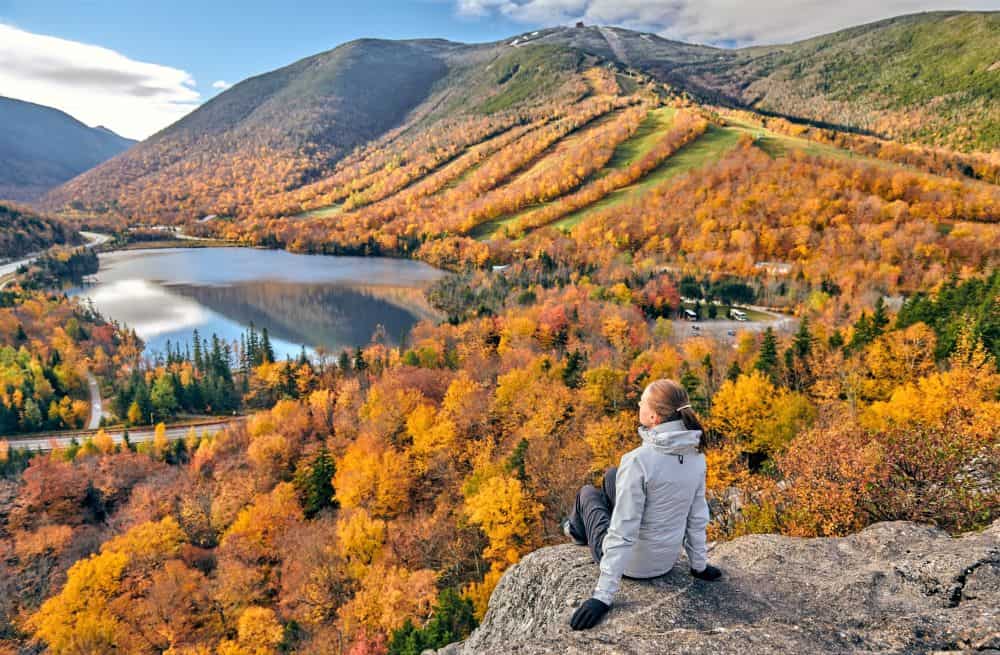
If you’re going to be out hiking in autumn, keep track of the fall foliage maps. You’ll want to try and time some of your favorite hikes to hit peak color.
Here is a website with foliage predictions for the entire United States
You can also google “foliage predictions for ‘my state’” to see if there is a more accurate local prediction. Keep in mind these are predictions based on the previous year, weather, and a host of other factors. If you look at multiple websites, they may not match perfectly.
Hiking in the Fall
With a little extra planning, fall will become one of your favorite seasons to hike! Take a little extra time to prepare, and have fun.